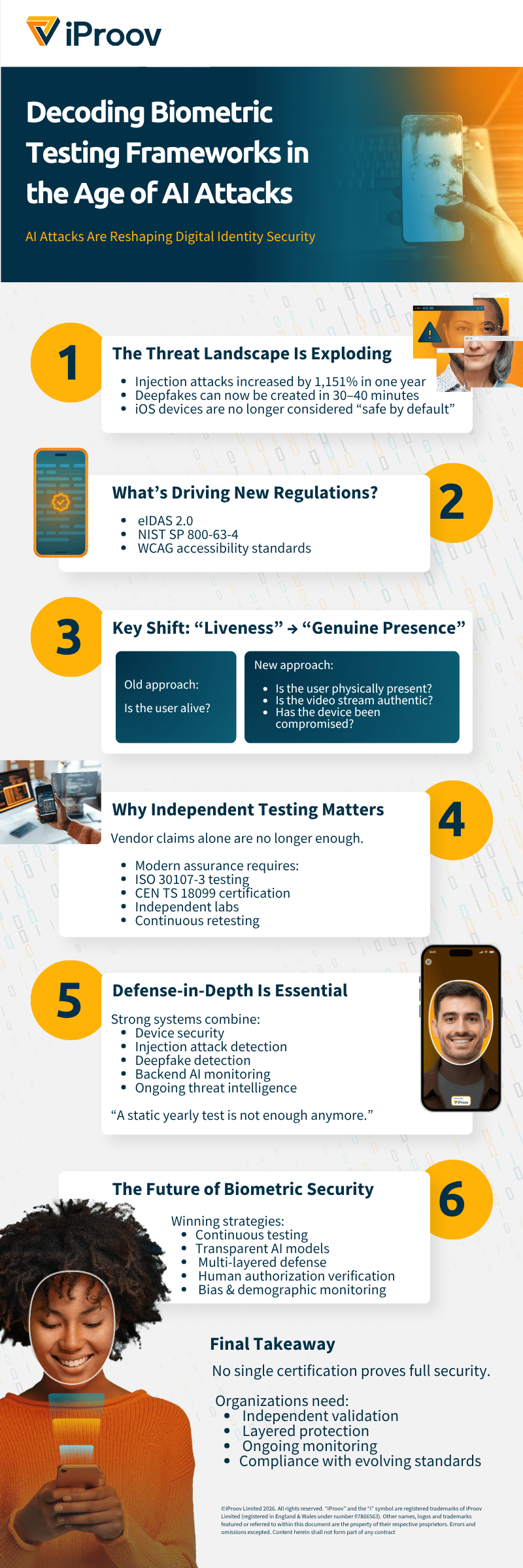
Decoding Biometric Testing Frameworks in the Age of AI Attacks
AI Attacks Are Changing Identity Security
Deepfakes, synthetic identities, and biometric injection attacks are evolving faster than traditional identity systems can adapt.
Injection attacks increased by 1,151% in one year, while high-quality deepfakes can now be created in under an hour. Even devices once considered secure by default are now vulnerable to AI-driven impersonation attacks.
The Shift From “Liveness” to “Genuine Presence”
Traditional biometric systems asked one question:
Is the user alive?
Modern identity assurance requires much more:
- Is the user physically present?
- Is the video stream authentic?
- Has the session or device been compromised?
- Is AI-generated content being injected into the process?
This shift is redefining how organizations approach digital trust.
Why Independent Testing Matters
Vendor claims alone are no longer enough.
Organizations should look for:
- ISO 30107-3 testing
- CEN TS 18099 certification
- Independent lab validation
- Continuous retesting against evolving threats
As AI attacks become more sophisticated, static annual testing is no longer sufficient.
Building Resilience Against AI-Driven Identity Fraud
Modern biometric security requires a layered, defense-in-depth approach that combines:
- Injection attack detection
- Deepfake detection
- Device security
- Backend AI monitoring
- Continuous threat intelligence
No single certification guarantees complete protection. Organizations need continuous assurance strategies designed to evolve alongside AI-enabled threats.