August 12, 2026
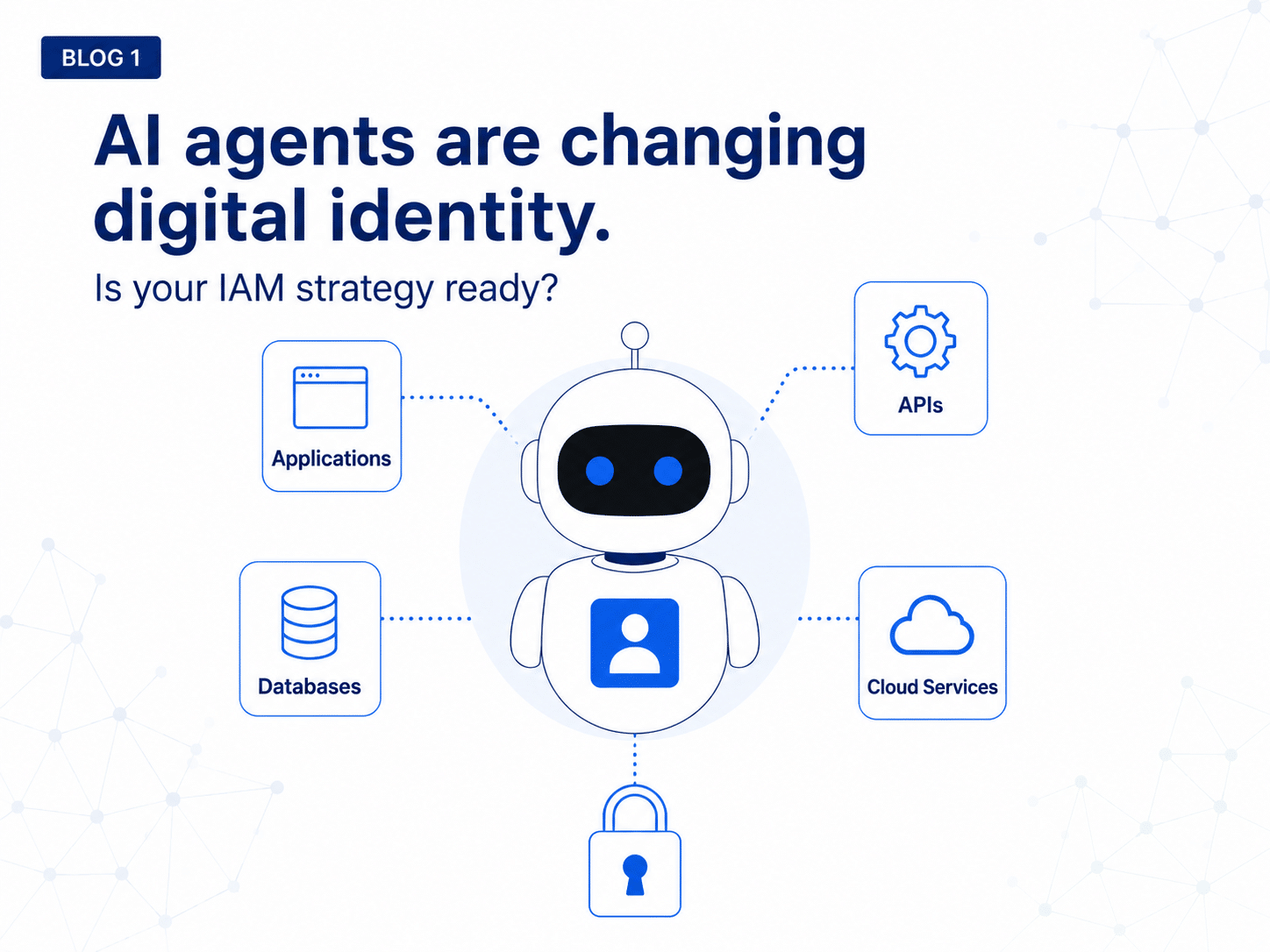
AI agents are moving out of the lab and into production. They research, write code, call applications, complete transactions, and chain together multi-step tasks with little human oversight. That shift creates an AI agent identity problem most organizations haven’t planned for, because the systems now being asked to govern agents were never designed with them in mind.
Traditional identity and access management assumes a person on the other end. Employees sign in, get access tied to their role, and lose it when they leave. Agents break that model. One agent might run around the clock, touch a dozen systems at once, and act on behalf of several different people over the course of a day.
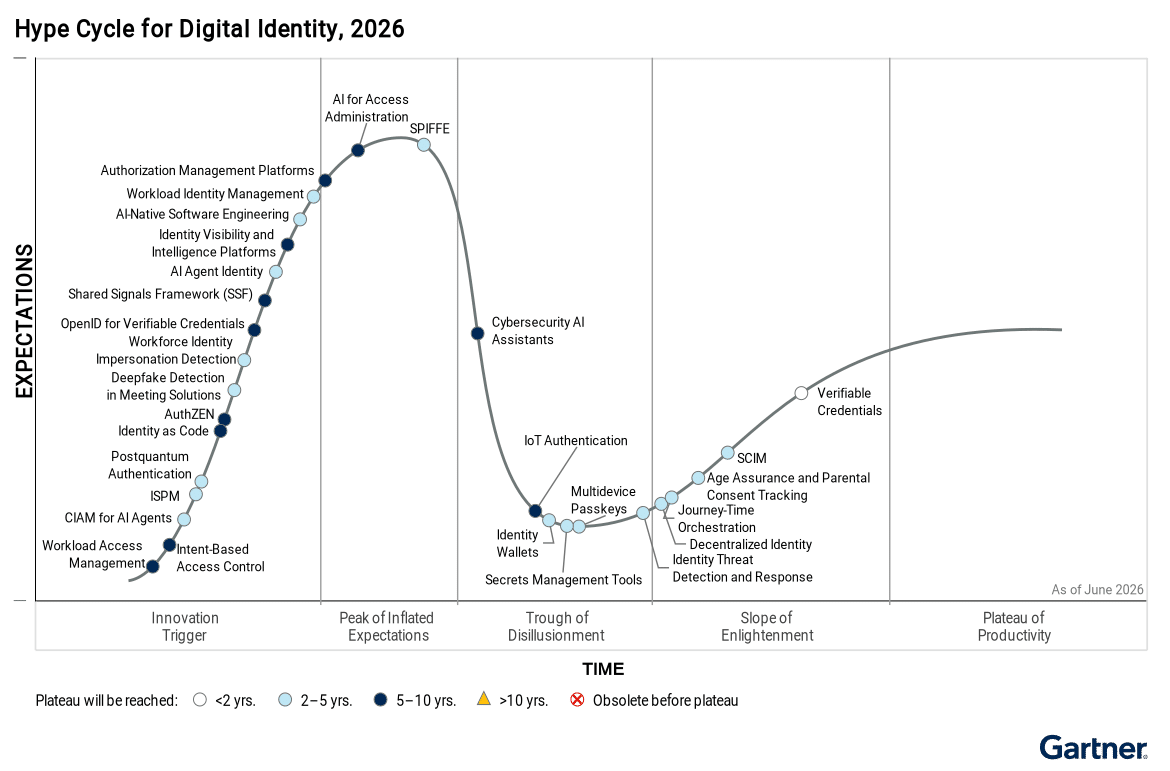
In its 2026 Hype Cycle™ for Digital Identity report, we believe Gartner® points to three forces reshaping digital identity: the rise of AI agents, the push for identity visibility, and a widening set of identity-based threats. The through-line is that security leaders will need to rethink where they invest if they want to support AI adoption without losing control of who – and what – can reach their systems.
IAM was built for people
Conventional IAM works when the user is a person with a job title, a manager, and a somewhat stable set of responsibilities. An agent has none of that. It might need a customer record for two seconds, call an API, update one field, and move on, with its permissions changing from one transaction to the next.
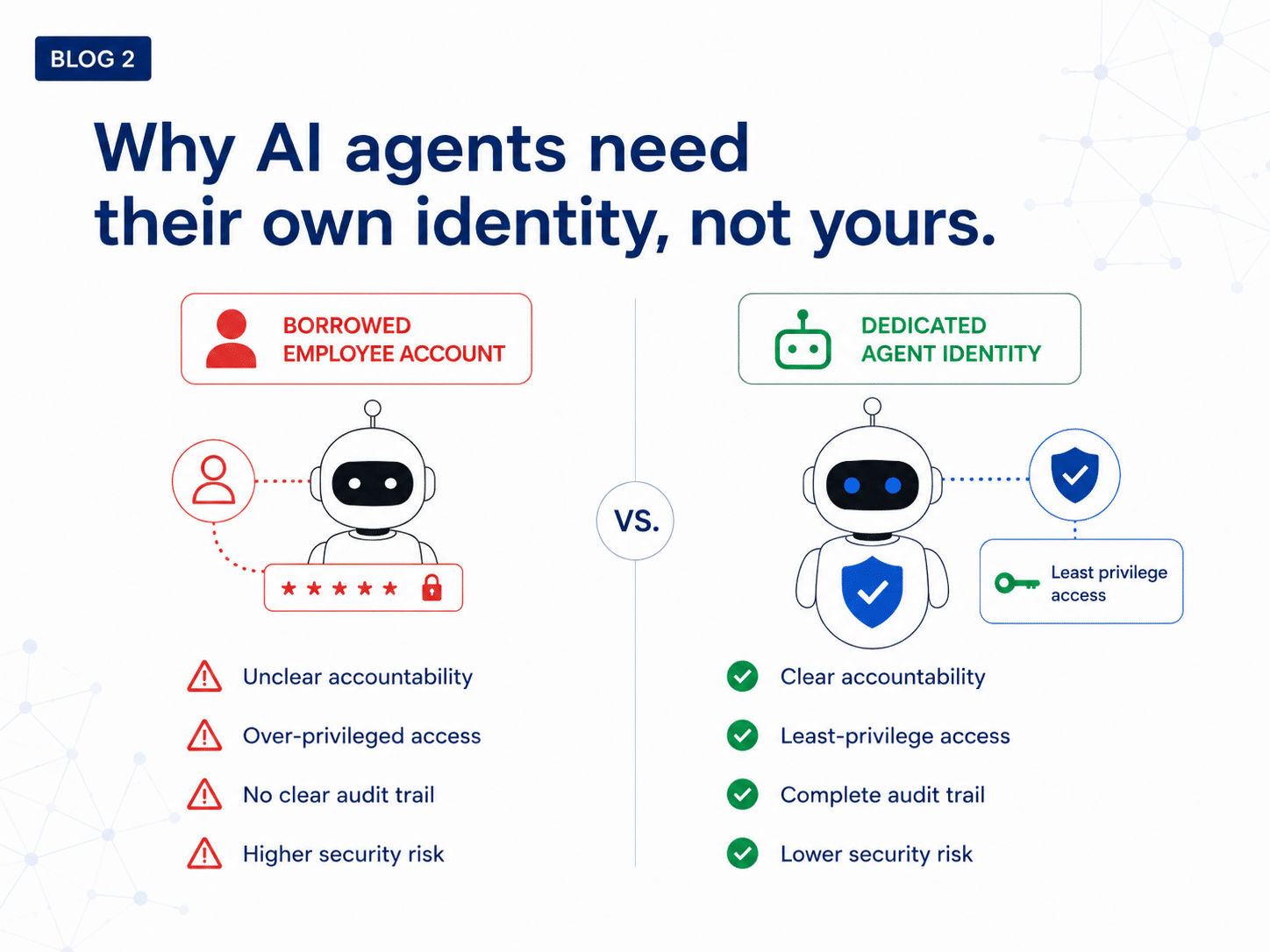
Plenty of teams cover that activity today with shared service accounts, static API keys, or a borrowed employee login. Those shortcuts get a project live faster, but they leave some basic questions unanswered: who actually took the action, what the agent was allowed to do, whether it needed that much access, and who is accountable when something goes wrong. Once agent activity is folded into a human or shared account, the audit trail stops meaning much, and permissions get harder to contain.
Machine identities are outpacing the programs meant to govern them
Non-human identities are already multiplying across cloud services, APIs, containers, automated workflows, and enterprise apps before agents entered the picture. The Gartner 2025 Machine Identity survey revealed that “94% of organizations are dealing with increased machine identities, largely driven by AI and AI agent deployments.”
That gap turns familiar hygiene problems into large-scale ones. Credentials outlive their purpose, permissions pile up, and teams lose track of which identities exist and what they can access. An attacker doesn’t need to compromise an employee’s login when there’s an over-privileged service account or an agent running on a long-lived key sitting right there.
Authentication alone won’t carry the next IAM strategy
Authenticating an agent confirms which identity is making a request. It says nothing about whether the request is reasonable. Answering that means weighing the agent’s role, the person it’s acting for, the task in front of it, and the sensitivity of what it’s trying to reach, and a single sign-in decision can’t hold all of that.
In our opinion, the Gartner Hype Cycle™ groups several emerging technologies around this problem: AI agent identity, workload access management, intent-based access control, identity security posture management, and identity visibility platforms. Between them, they describe a more dynamic model, where access can be short-lived, scoped to a single task, and reviewed continuously rather than granted once and forgotten.
Where to start
The practical first move is to map how agents are already being used inside your organization, including the sanctioned projects and the ones a developer wired up without a formal review. From there, you can find where agents are running on human credentials, sharing service accounts, holding broad or permanent permissions, reaching sensitive data, or operating with no clear owner.
The aim isn’t to slow AI adoption but to keep a temporary workaround from hardening into permanent security architecture. It helps to connect AI agent identity governance to the machine-identity and Zero Trust work already underway. Stand AI up as its own security project, and you create another silo; treat agents as identities, and you can apply controls the business already understands.
A harder set of questions
For years, IAM came down to one question: is this the right user? Agents add several more. What is making this request? Who authorized it? What is it trying to do? Should it still have access right now? Those get harder to answer as agents take on more work, and the organizations that tackle them early will have far more room to use AI without handing it broad, invisible access across the business.
The Gartner Hype Cycle™ for Digital Identity, 2026 maps more than two dozen technologies reshaping identity, from AI agent identity and workload access management to identity visibility platforms and the Shared Signals Framework, each with the Gartner benefit rating, maturity assessment, and estimated time to mainstream adoption.
Download the Gartner Hype Cycle for Digital Identity, 2026 ›
Gartner, Hype Cycle for Digital Identity, 2026, Zachary Smith, Nayara Sangiorgio, 6 July 2026.
Gartner and Hype Cycle are a trademark of Gartner, Inc., and/or its affiliates.
Gartner does not endorse any company, vendor, product, or service depicted in its publications, and does not advise technology users to select only those vendors with the highest ratings or other designation. Gartner publications consist of the opinions of Gartner’s business and technology insights organization and should not be construed as statements of fact. Gartner disclaims all warranties, expressed or implied, with respect to this publication, including any warranties of merchantability or fitness for a particular purpose.
This graphic was published by Gartner, Inc. as part of a larger research document and should be evaluated in the context of the entire document. The Gartner document is available upon request from IPROOV LTD.
Next in the series: why AI agents need identities of their own, and why letting them borrow employee credentials causes more problems than it solves